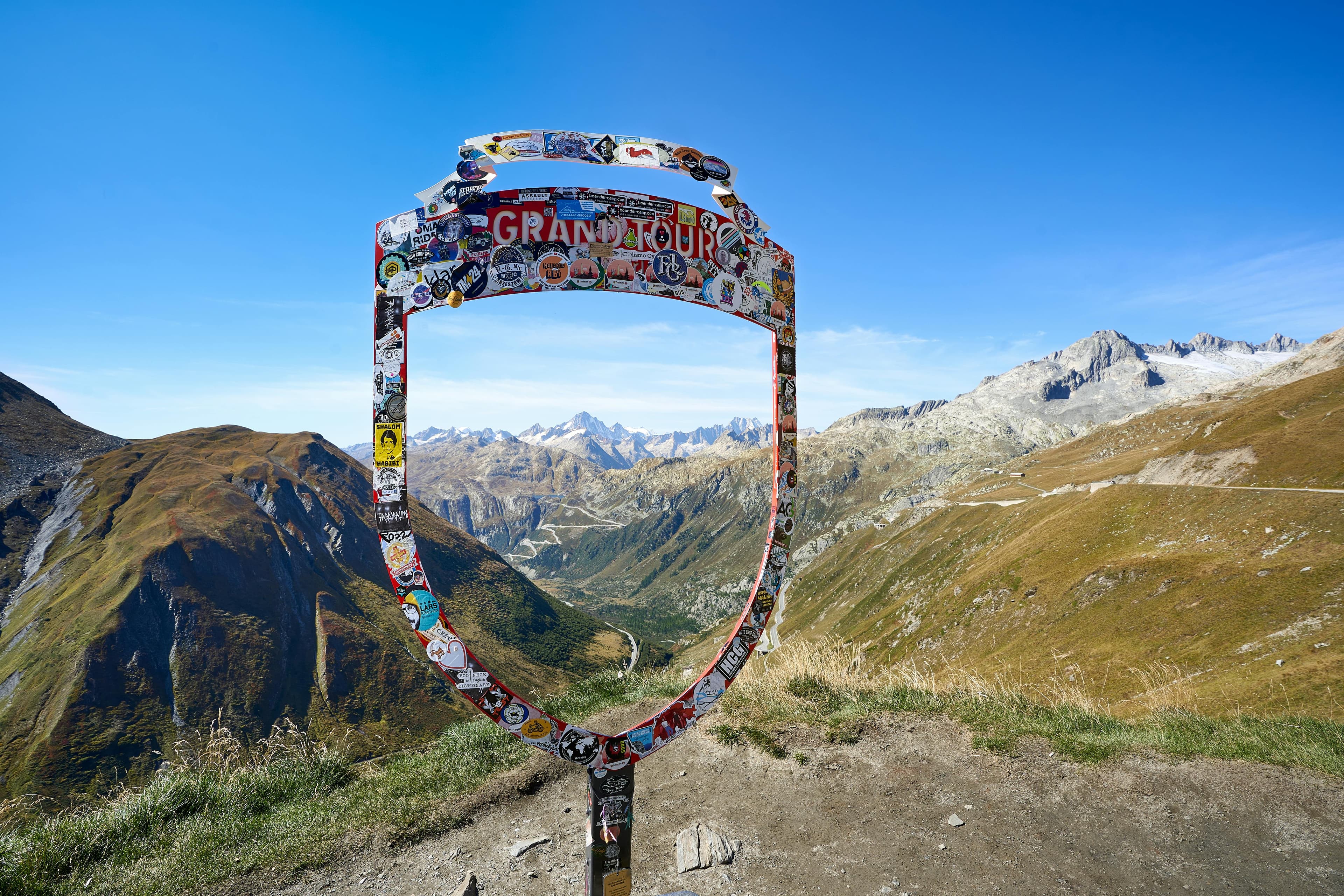
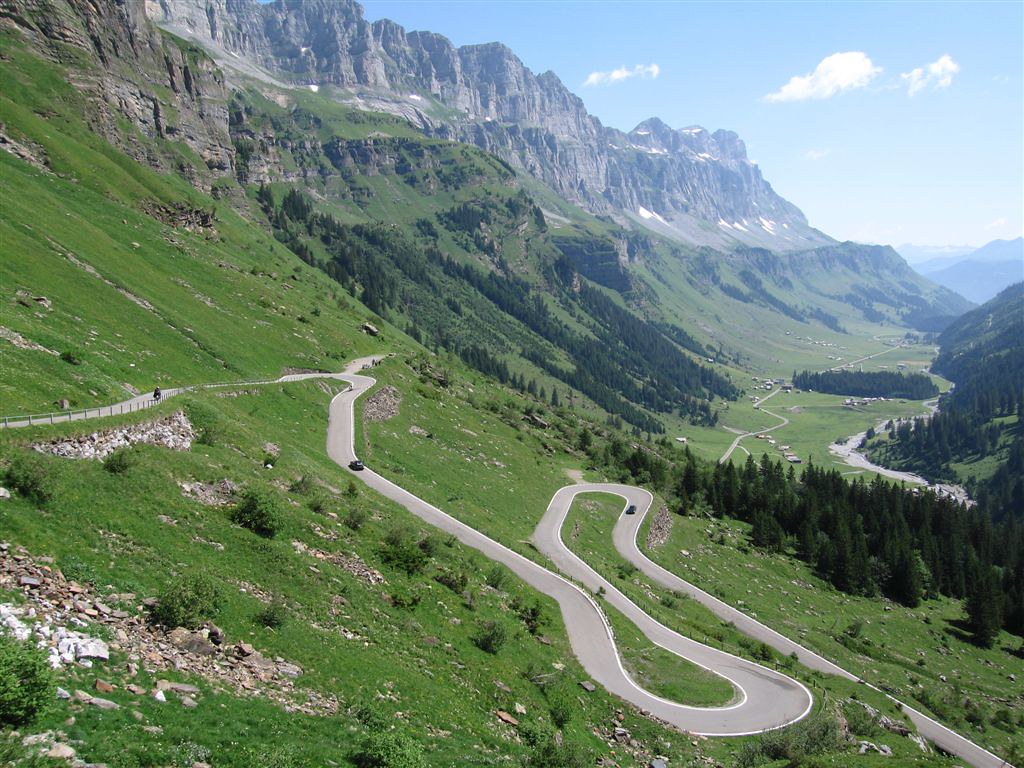
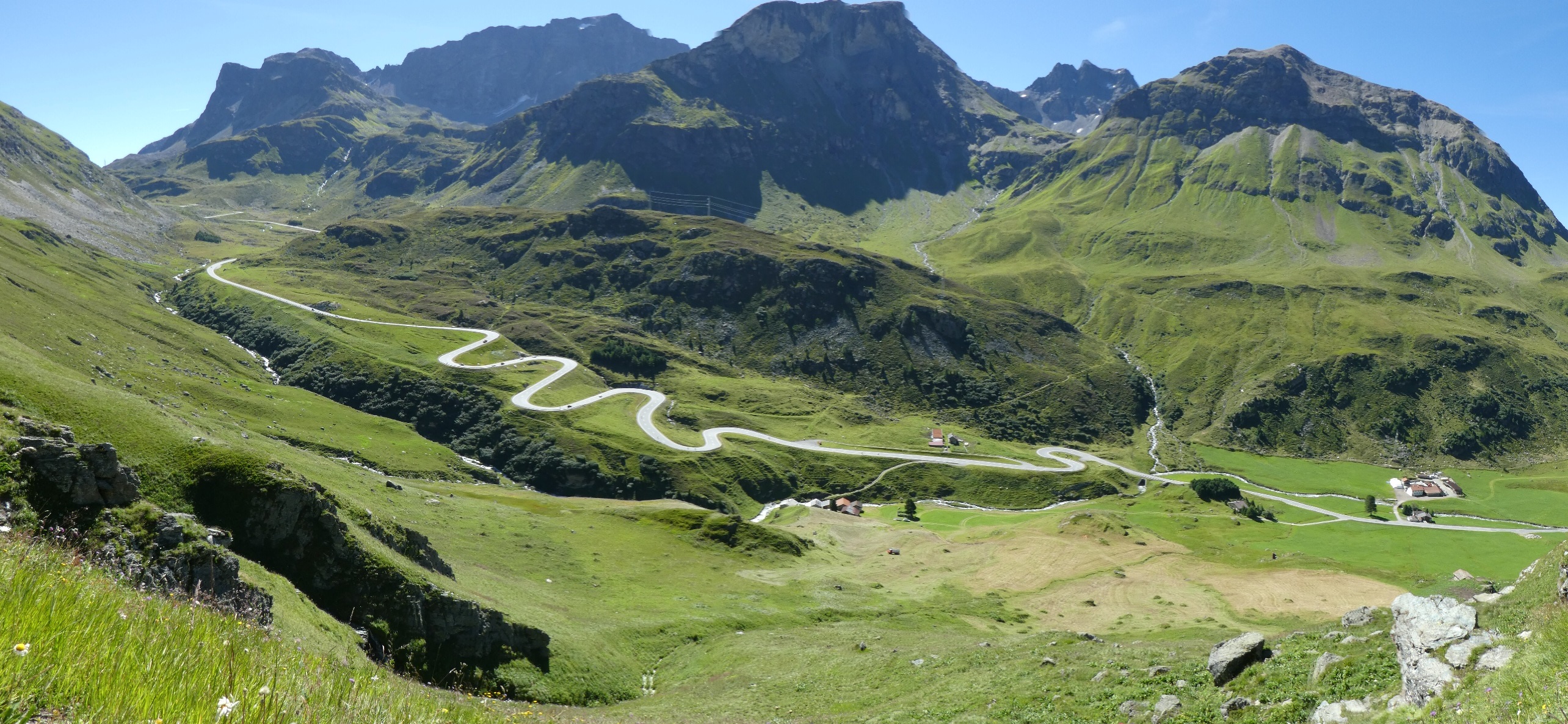
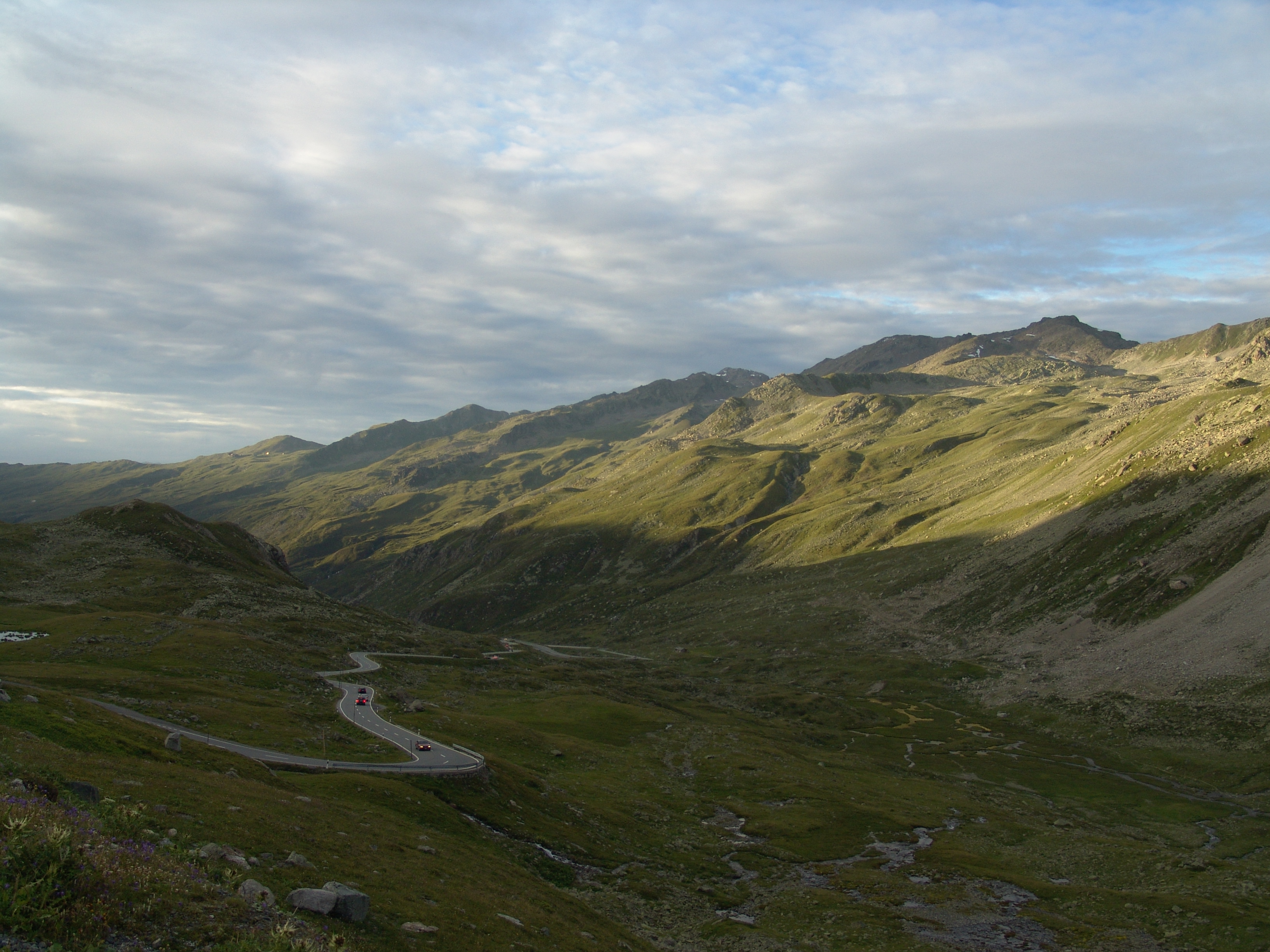
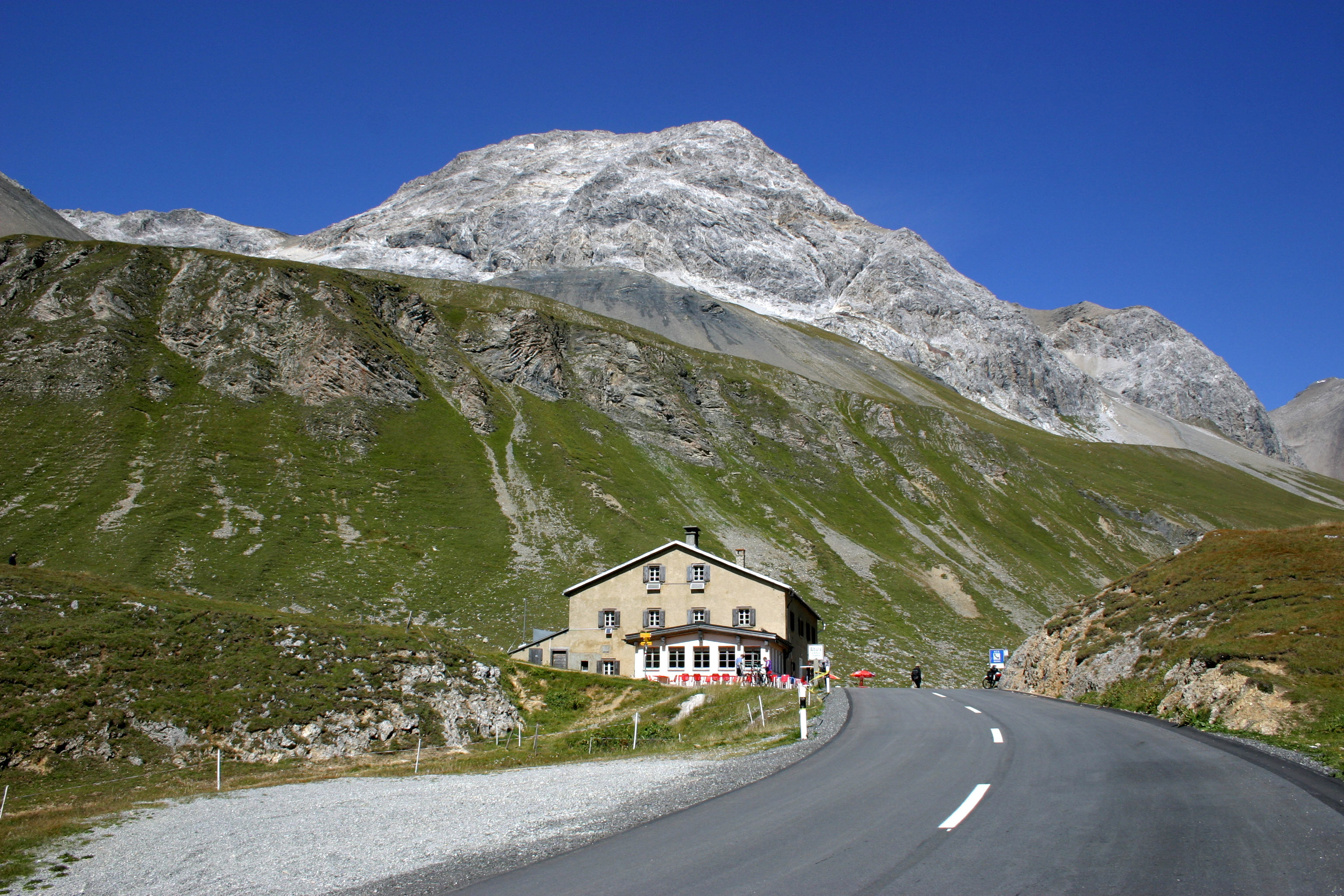
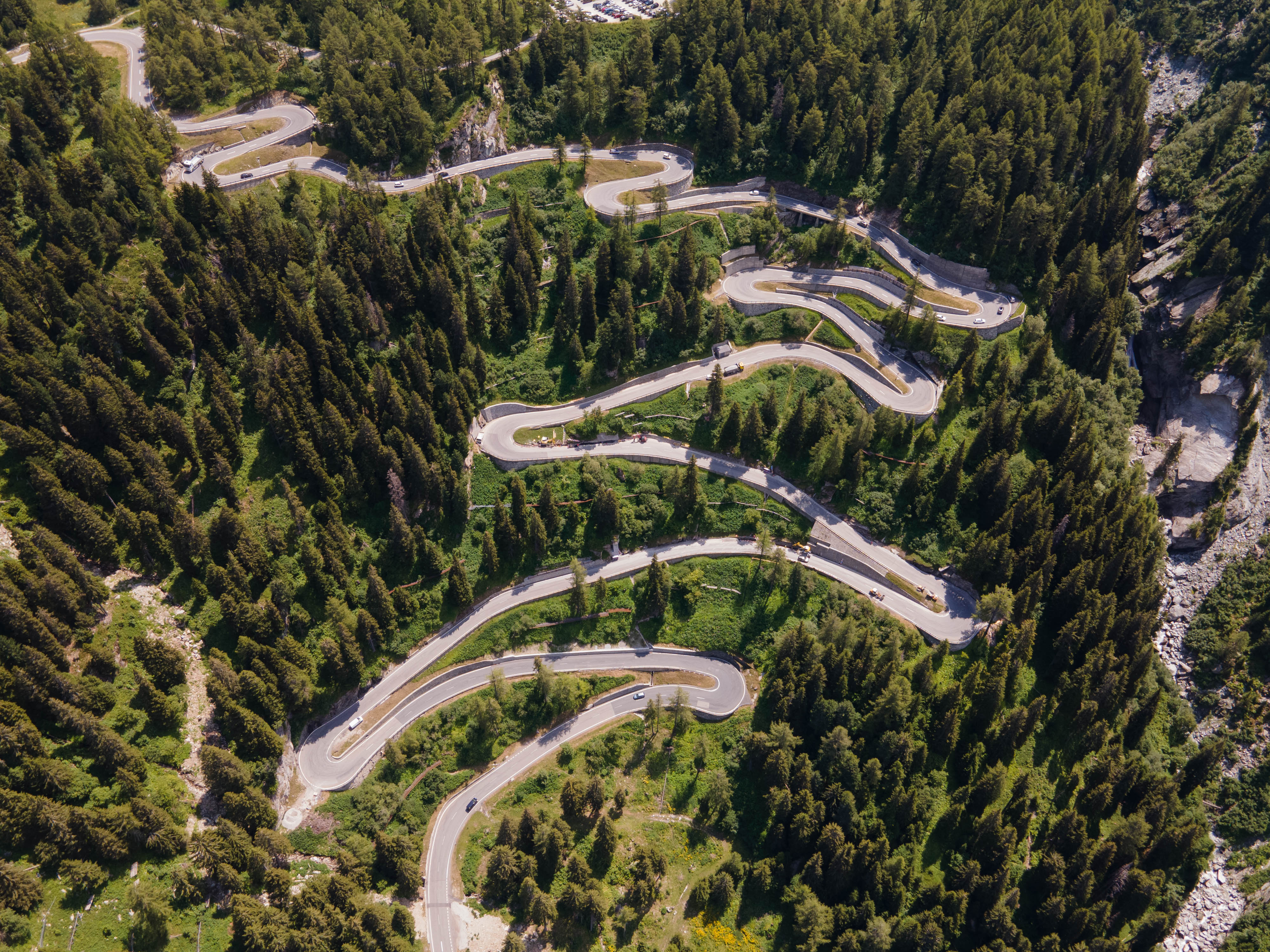
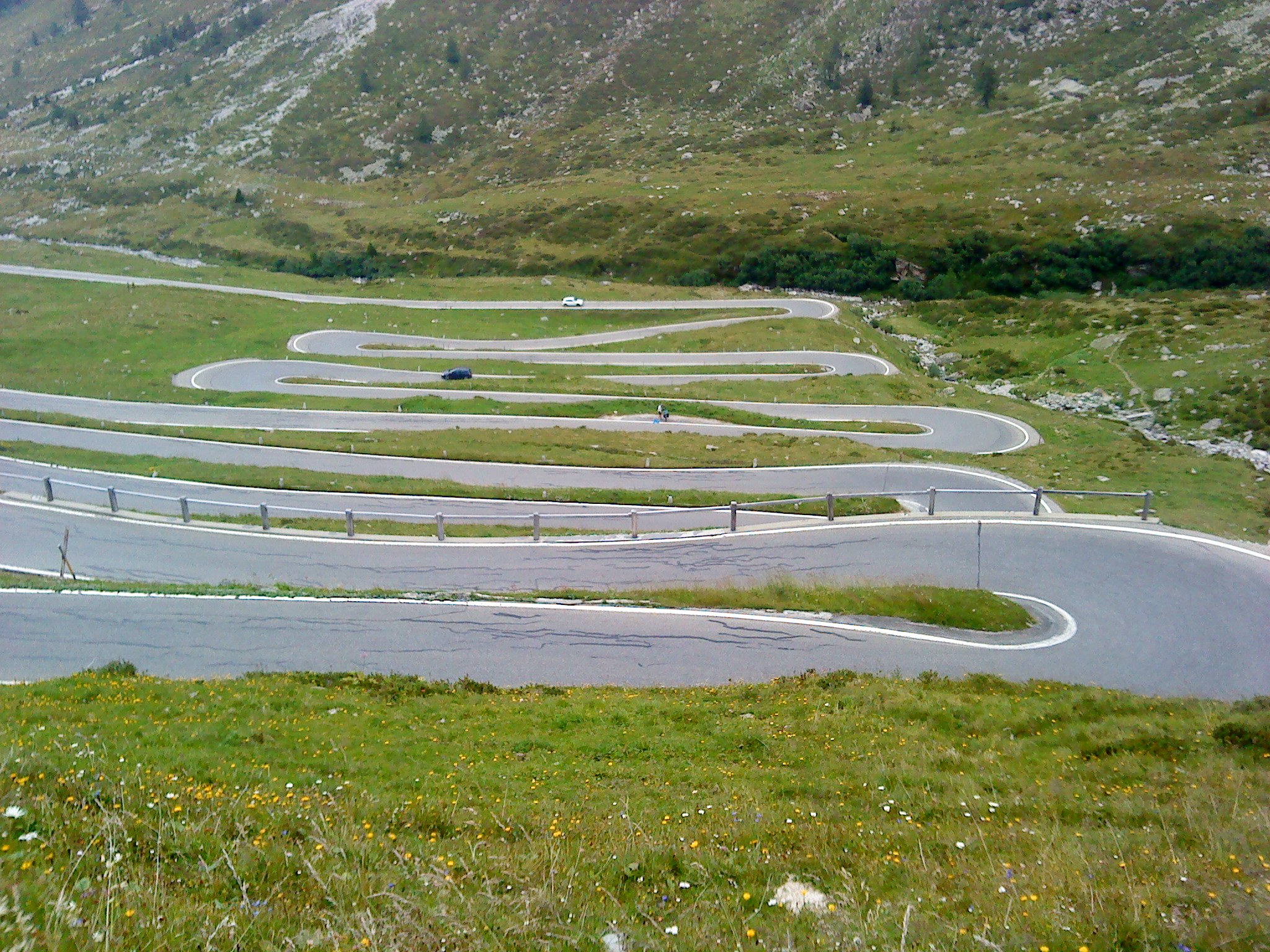
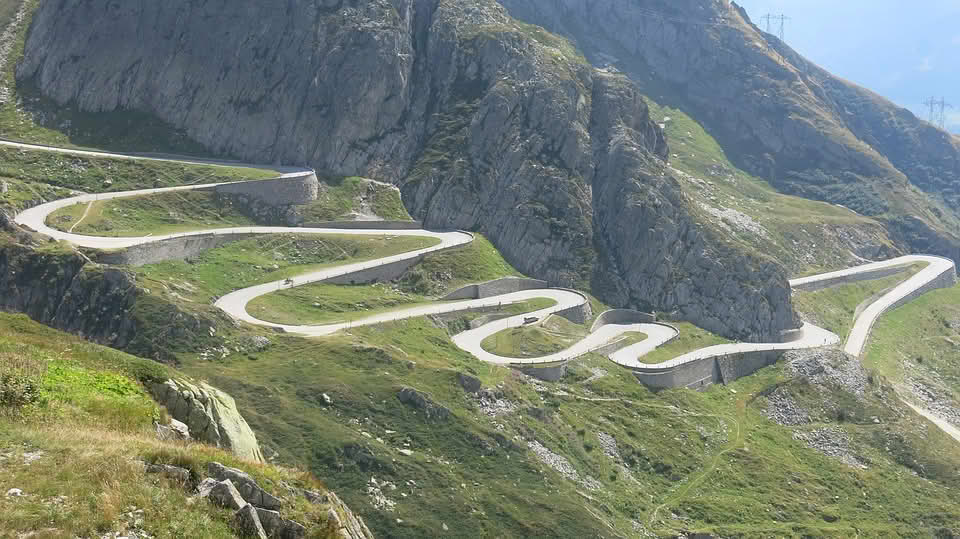
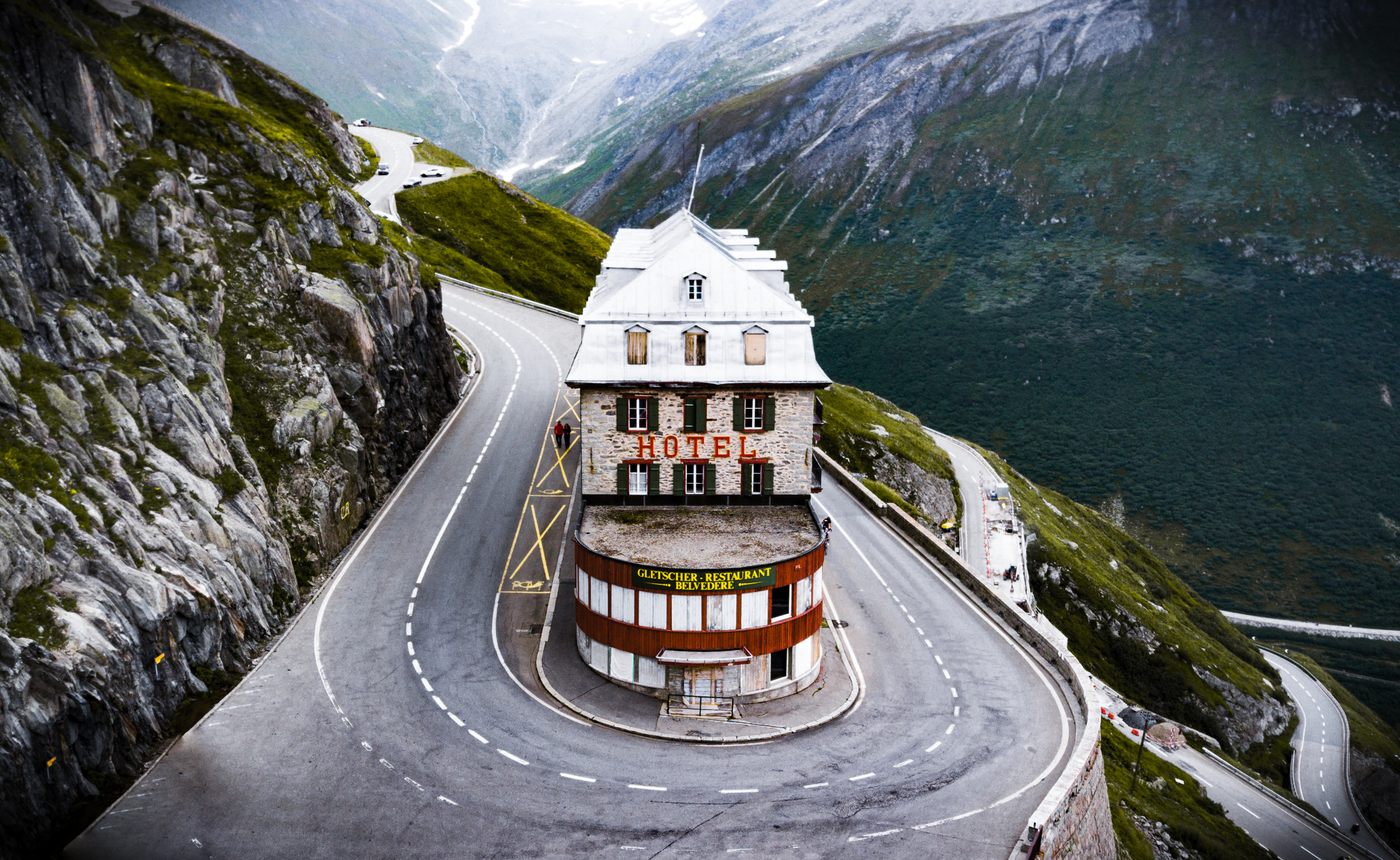
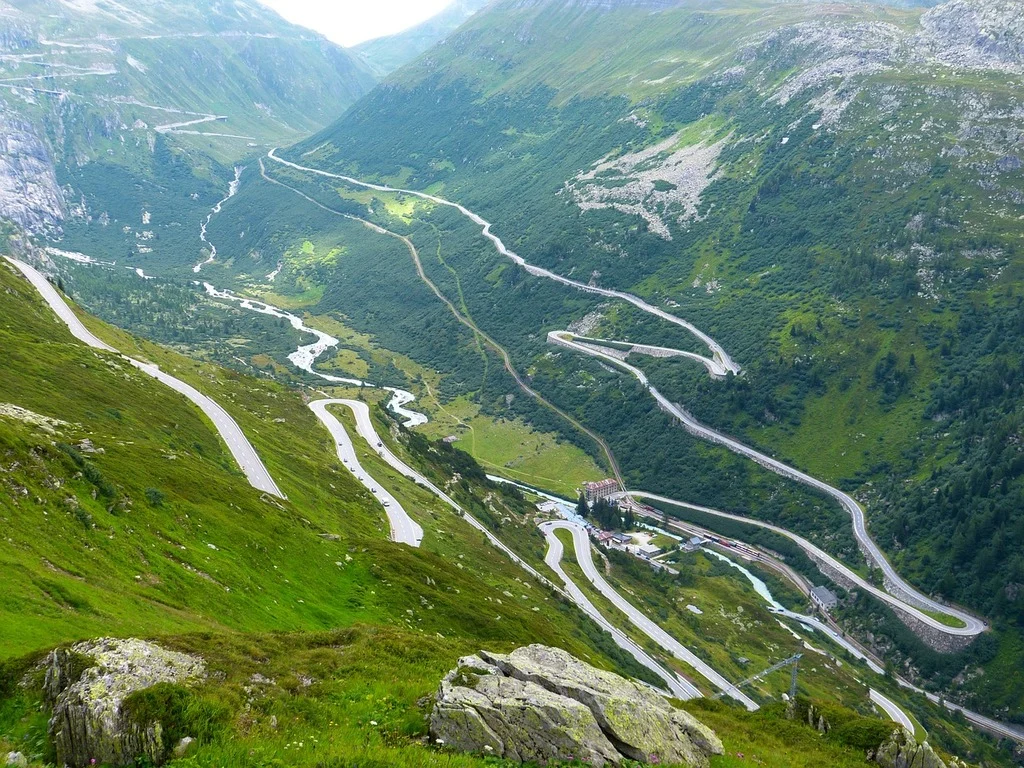
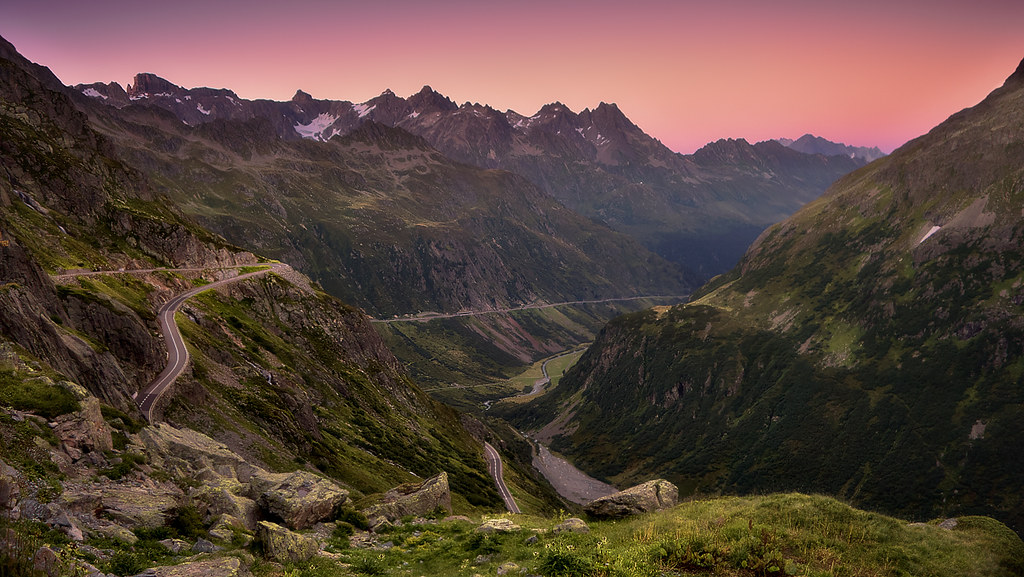
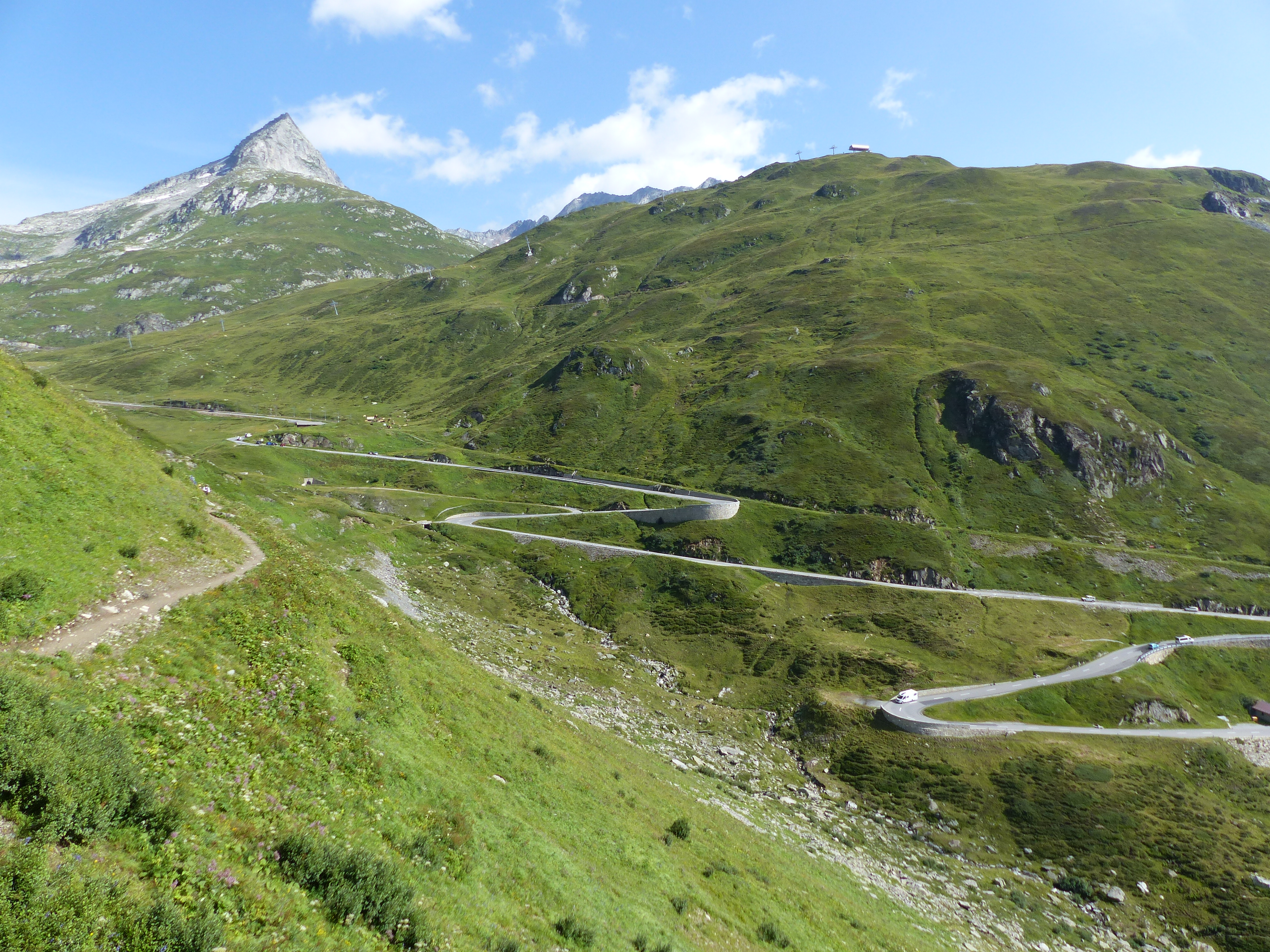
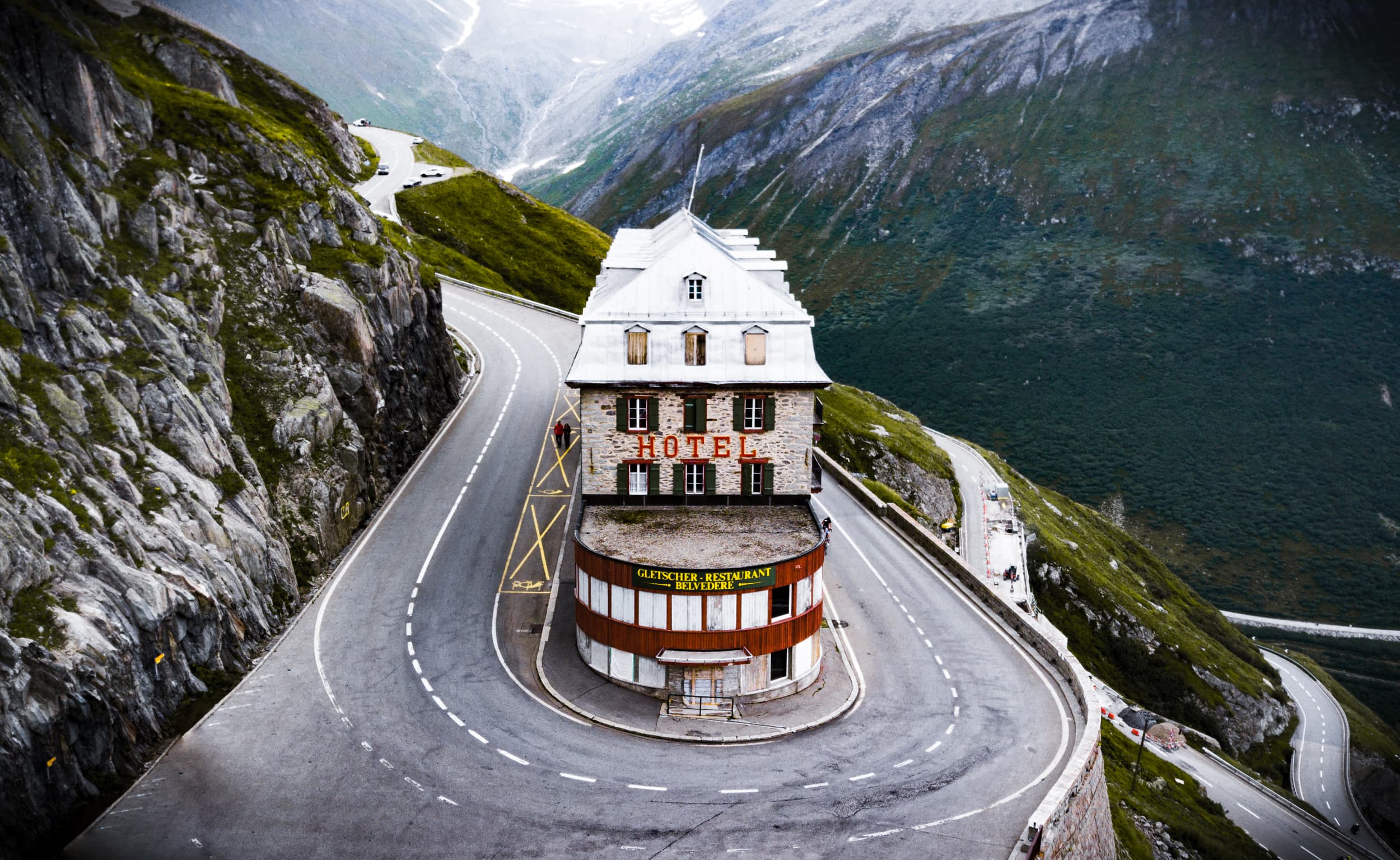
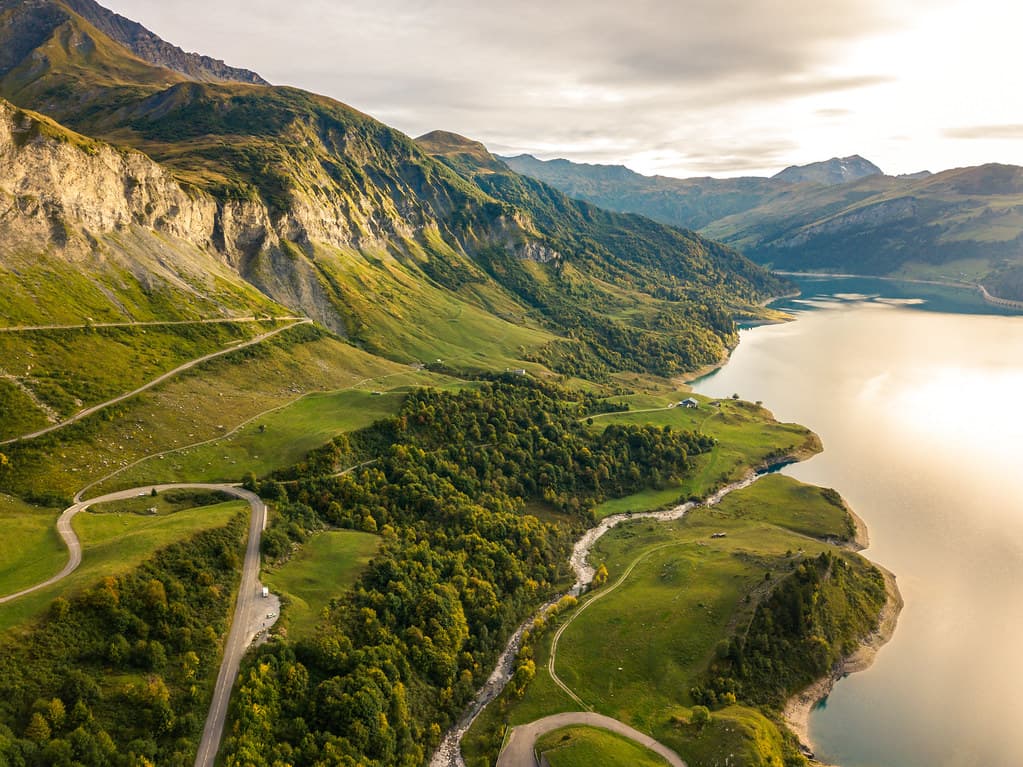
The official Grand Tour of Switzerland is 1,643 signed kilometres, five passes, 22 lakes and 12 UNESCO sites. Driven literally, it takes two weeks and includes substantial stretches of lakeside villages and valley floors that are scenery more than driving. The version below is the compressed, enthusiast's cut, seven days, 1,200 kilometres, every major pass, and the lakeside transits kept short.
The loop starts and ends in Zurich. Day 1 heads southeast to St. Moritz via the Klausen and Julier, putting two of the quieter classics behind you before dinner. Day 2 is the Engadine high day, Bernina, Flüela, and a detour over the Albula. Day 3 crosses south into Ticino via the Maloja and returns north over the Gotthard's old Tremola road to Andermatt. Day 4 is the Big Three in compressed form, Furka, Grimsel, Susten back to Interlaken. Day 5 takes the Grimsel south into Valais, the Nufenen east, and back north through Ticino to Lucerne. Day 6 adds the Brünig and a final Furka run. Day 7 is the return via the Oberalp to Zurich.
The pace is deliberate. Every day includes at least one major pass; most include two. Transit sections are kept under two hours. Nights are spent in towns that matter to the region, St. Moritz, Andermatt, Interlaken, Lucerne, not in anonymous motorway hotels. Budget for good hotels: Switzerland punishes corner-cutting on accommodation, and the difference between a mid-range hotel and a proper four-star is not as large as you'd expect once you factor in location.
The vignette (CHF 40) is compulsory for any autobahn transit and is on sale at every border and petrol station. No Swiss pass charges its own toll. Fuel is expensive but available everywhere. Credit cards are accepted universally. The one thing the Swiss road system does not tolerate is speeding: fines are substantial and radar is dense. Stay within 5km/h of the limit on the autobahn and you'll never hear from anyone.
Weather is the variable. Any day can turn, pack waterproofs, plan for the possibility of an afternoon change, and treat the forecast as advisory rather than prescriptive. Late June through mid-September is the reliable window. July brings heat in the valleys but perfect pass weather above 2,000m. September is the best single month: cool, clear, and empty on weekdays.