What the vignette is
Switzerland does not charge tolls per kilometre on its motorways. Instead, it sells a single annual sticker — the vignette — that covers unlimited motorway use for one calendar year. Price: CHF 40. Valid: 1 December of the previous year through 31 January of the following year (so a 2026 vignette covers you from 1 December 2025 through 31 January 2027). You need one if you drive on any Swiss motorway (A-roads signed in green). You do not need one for city streets, normal alpine passes, or cantonal roads.
You need the vignette regardless of how long you are in the country. If you are in Switzerland for two days and use the A2 to get from Zurich to Andermatt, you need the same CHF 40 vignette a Swiss resident buys for the year.
Where to buy it
The sticker is sold at:
- Every Swiss border crossing, inside the cantonal/customs building or at the petrol station immediately after the crossing
- Every petrol station inside Switzerland that sells fuel on the motorway
- Online from admin.ch — delivered by post, only useful if you are planning weeks ahead
- Swiss post offices — useful if you are already in-country
If you are driving from Germany, France, Austria or Italy into Switzerland, the simplest approach is to stop at the first petrol station inside the border, buy the vignette, and stick it before you reach the first motorway section. Payment is cash or card, most places accept euros at a slightly unfavourable rate.
Do not try to find a cheap third-party seller online. The vignette is a physical sticker with a serial number; counterfeits exist and the fine for a fake is significantly worse than the fine for no vignette at all.
The digital vignette (2024+)
Since 2024, Switzerland also sells a digital e-vignette tied to your number plate. Same price (CHF 40), bought online at via.admin.ch, no sticker required. This is convenient — especially if you change rental cars mid-trip and have the old sticker on a car you no longer have — but it has one catch: you need to buy it before crossing into Switzerland. Enforcement is automatic number-plate scanning; if you drive onto a Swiss motorway without the digital vignette registered against your plate, you get a ticket.
For a one-off trip with a rental car picked up at Zurich airport, the physical sticker is simpler: the rental agency will usually give you a car that already has one. Ask when collecting the keys.
How to stick it correctly
This matters more than it sounds.
The sticker must be applied to the inside of the windscreen, on the passenger side, flat against the glass. Peel off the backing, press firmly, make sure no air bubbles. If your windscreen has a hydrophobic coating, clean the area with alcohol first or the sticker will peel off in two days.
Do not tape it to the dashboard. Do not leave it in the glovebox. Do not stick it loose on the inside. A Swiss police officer can and will check at a routine stop, and a loose vignette is treated as no vignette.
When the year ends and you need a new sticker, you must remove the old one. The sticker is designed to tear apart on removal, which is the point. You cannot legally apply it to a different car than the one it was first applied to.
The fine
The fine for no vignette is CHF 200, plus the CHF 40 for the vignette you have to buy on the spot. You pay both. Swiss police do not give warnings on this, and there is no "I'll get one later" option.
The fine for a fake or counterfeit vignette is CHF 500 plus confiscation, and potentially a customs investigation. Do not buy from anywhere other than official sources.
When you don't need one
- You are staying in a city (Zurich, Geneva, Basel) and not touching the motorway
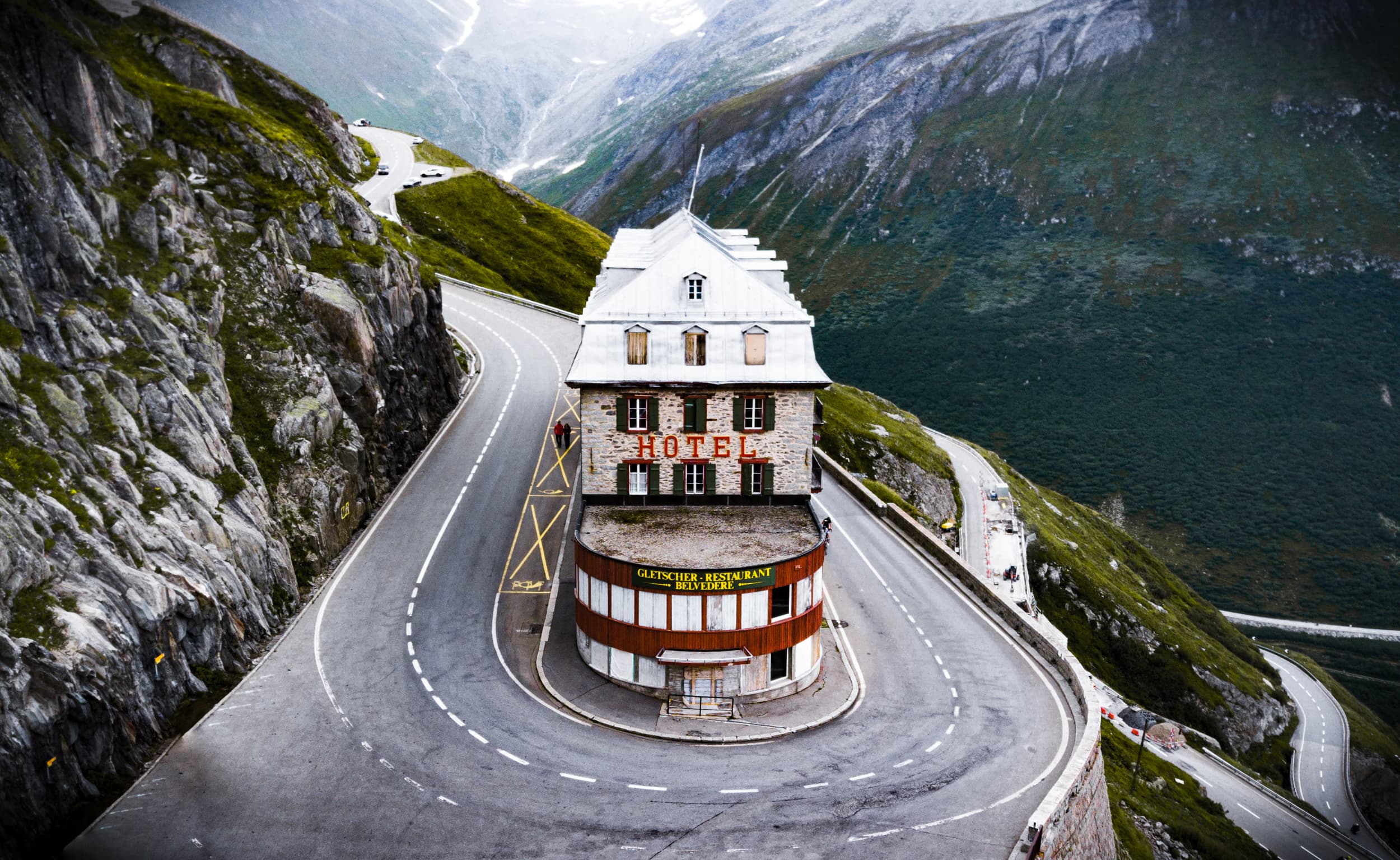
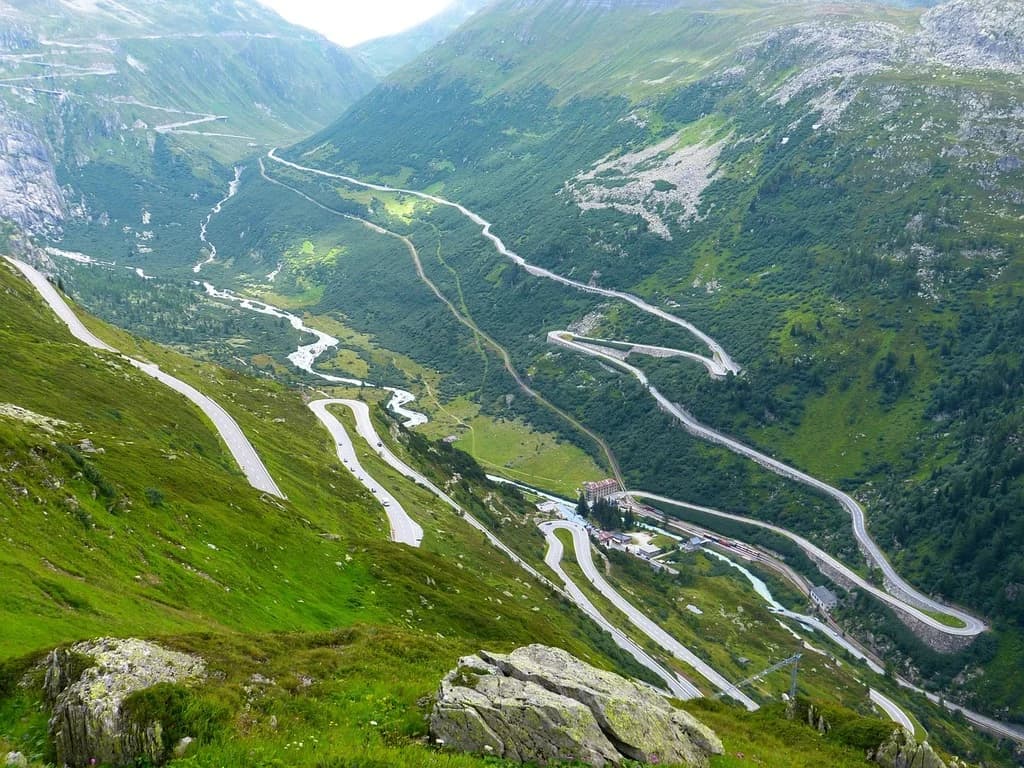
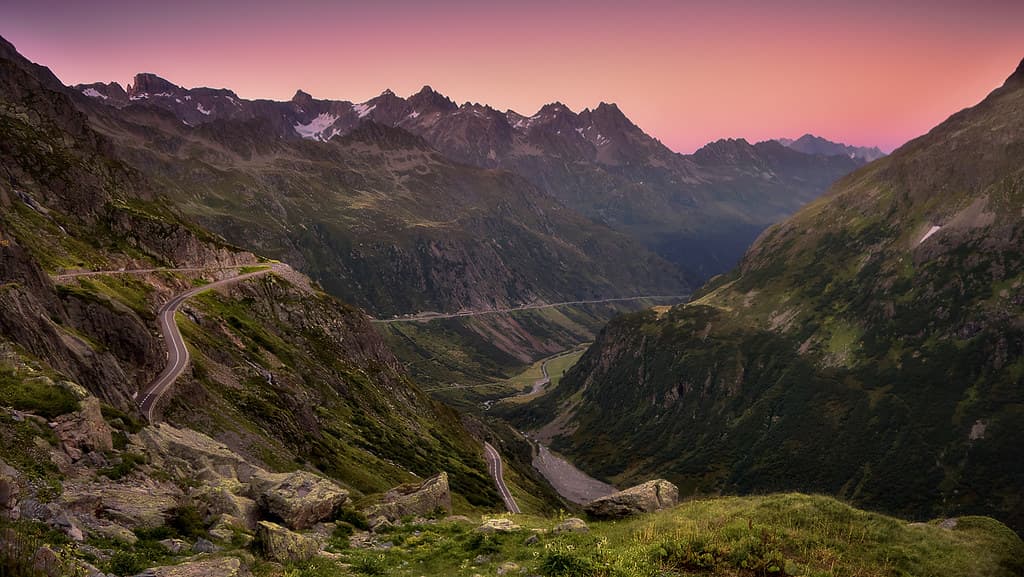
- You are driving alpine passes only and using cantonal roads to connect them — this is unusual but doable; the Furka, Grimsel and Susten don't require motorway access if you stay in the mountains
- You are crossing Switzerland on a single non-motorway route
The catch on the third scenario: if you take a wrong turn and end up on any motorway section, you need the vignette. Buying on arrival at the first petrol station is always the simpler call.
Rental cars and the vignette
Rental cars in Switzerland come with a vignette. Rental cars collected in neighbouring countries (Germany, France, Italy) often do not — especially if you're getting a sports car on a pre-paid short-term rental. Always ask. If the answer is no, buy the vignette at the first Swiss petrol station before you use any motorway.
If you are driving a friend's car across the border, check before you cross. Swiss number plates always have the vignette on; non-Swiss plates coming in may not.
Austria and the Alps more broadly
Austria operates the same system but at a different price (EUR 12.80 for a 10-day vignette, EUR 32.60 for a 2-month one, EUR 108.80 for the year). Austria also sells a digital version tied to the plate. Different country, separate purchase.
Italy, France and Germany all charge per-kilometre tolls on motorways instead of selling vignettes. No sticker needed in those three countries. If you are driving a full alpine loop — Switzerland, Italy, Austria, Germany, back to Switzerland — you will pay Swiss vignette, Austrian vignette, Italian tolls, French tolls (on any autoroutes), no German charge. Budget roughly CHF 80 for the two vignettes and EUR 50-150 for Italian/French tolls depending on route.
The TLDR
CHF 40, buy at the border, stick it inside the windscreen, keep the receipt, enjoy the motorway. The one thing not to do is forget — Swiss highway patrol is diligent, and CHF 240 of fines plus a missed morning at the Furka is not how you want the trip to start.