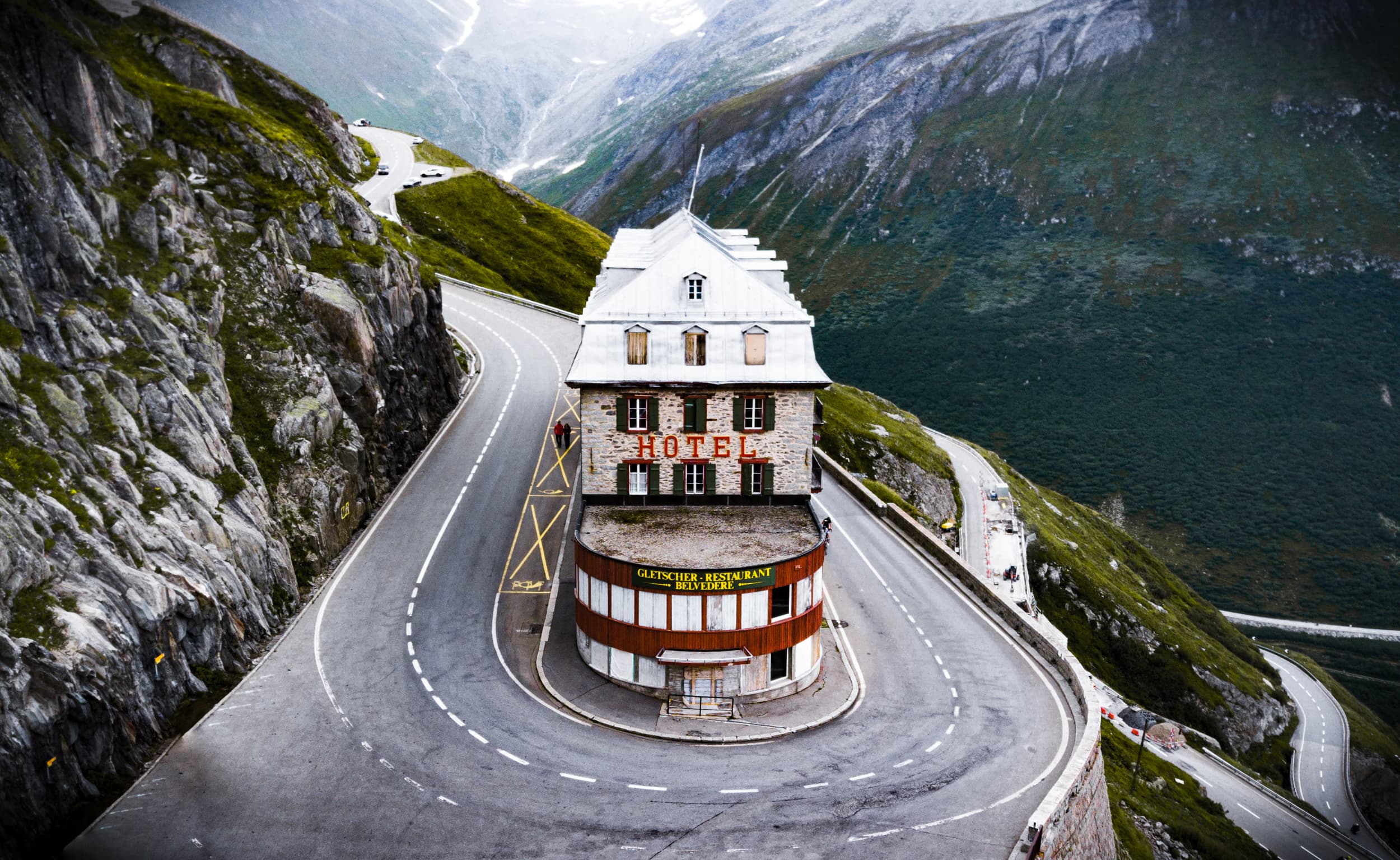
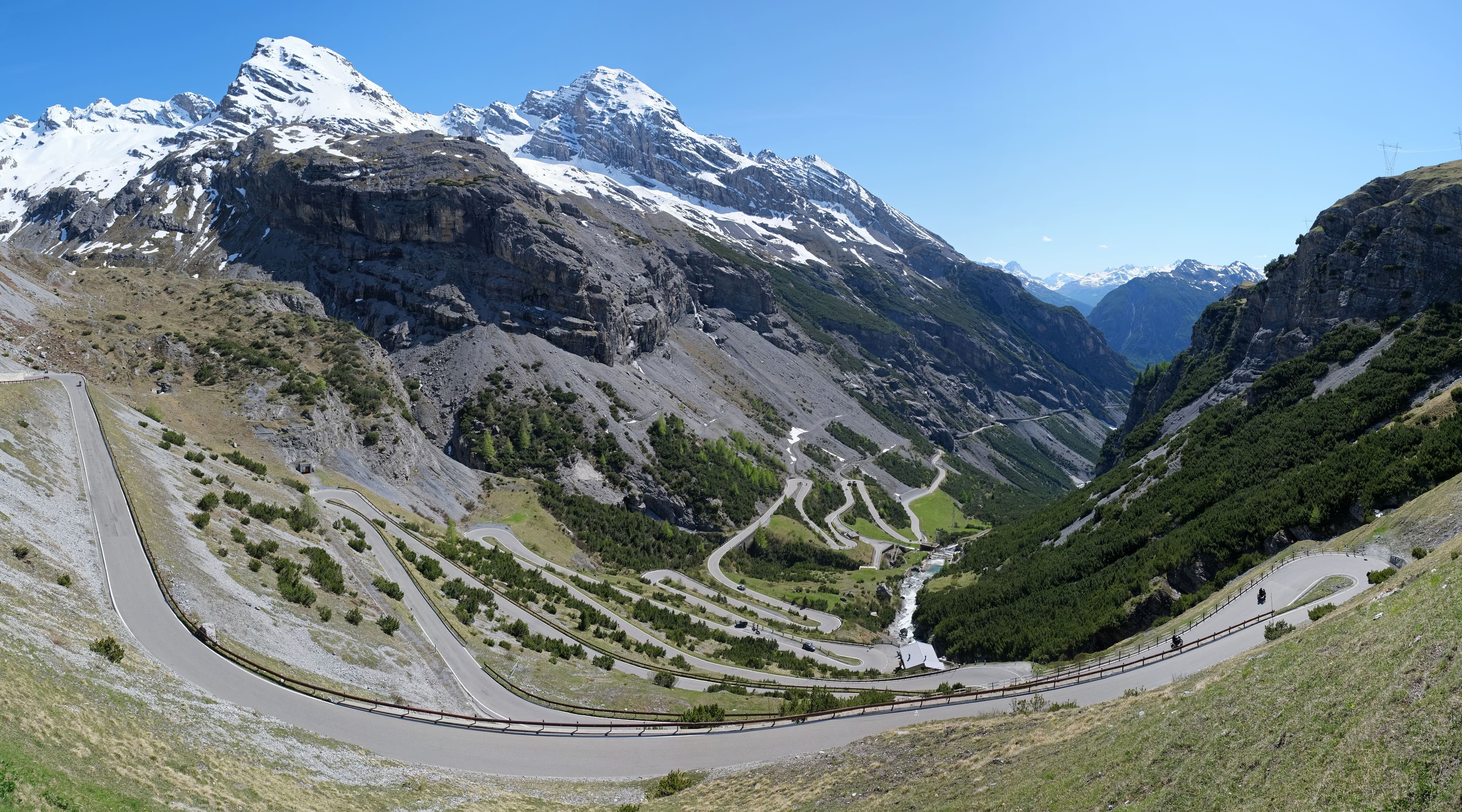
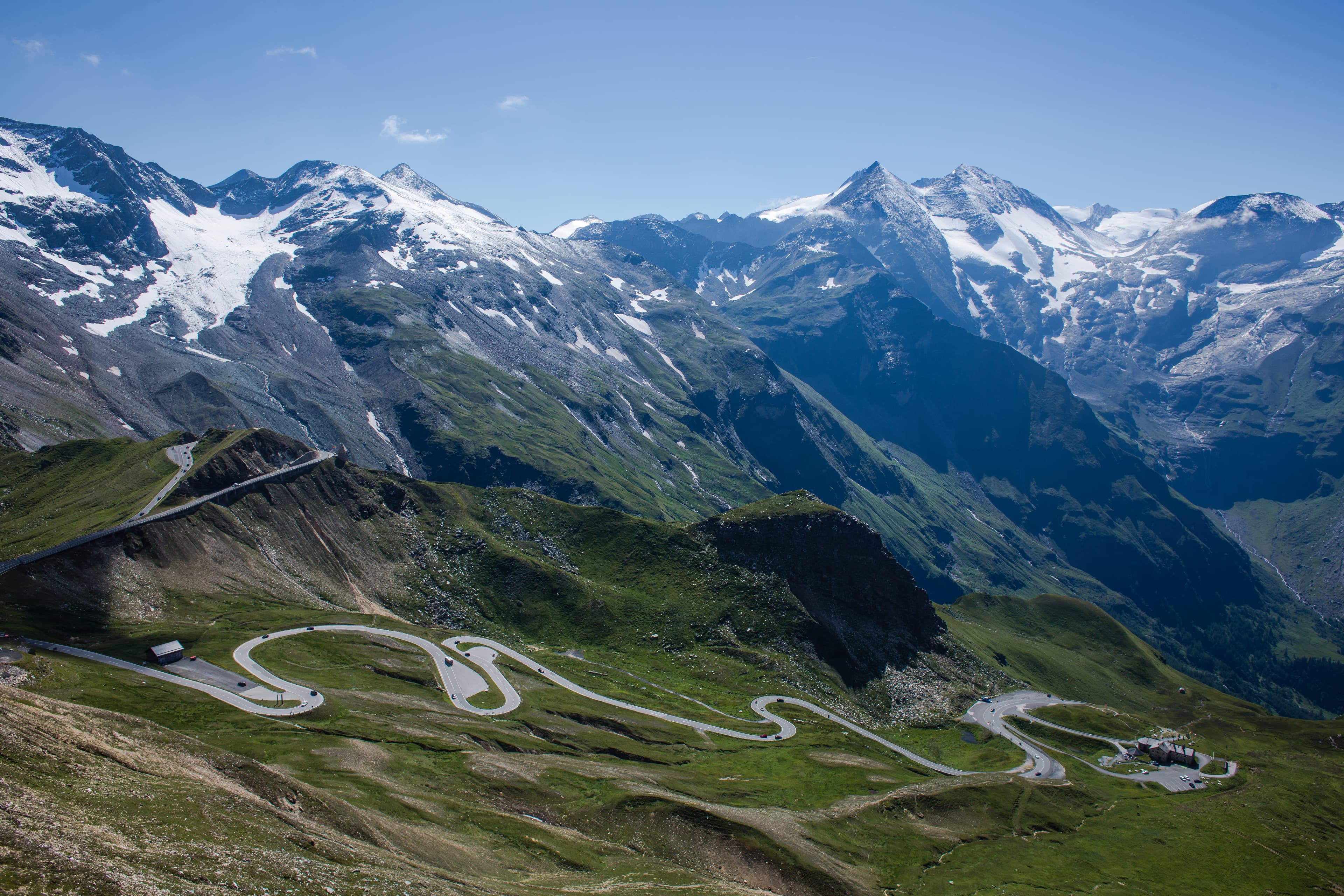
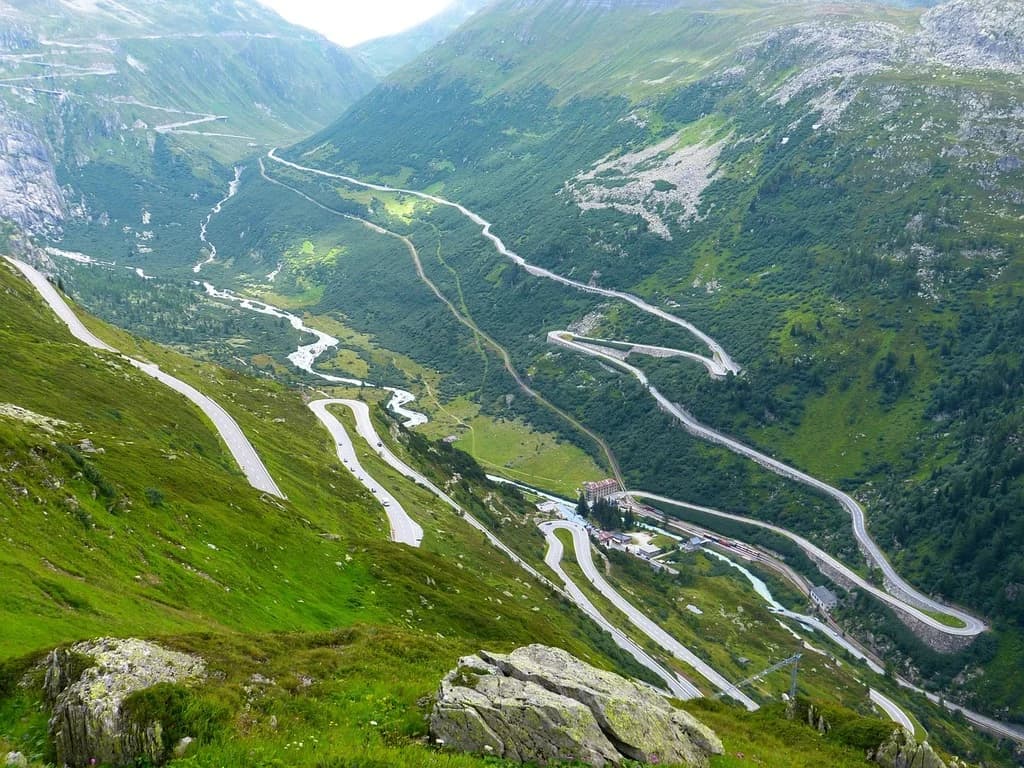
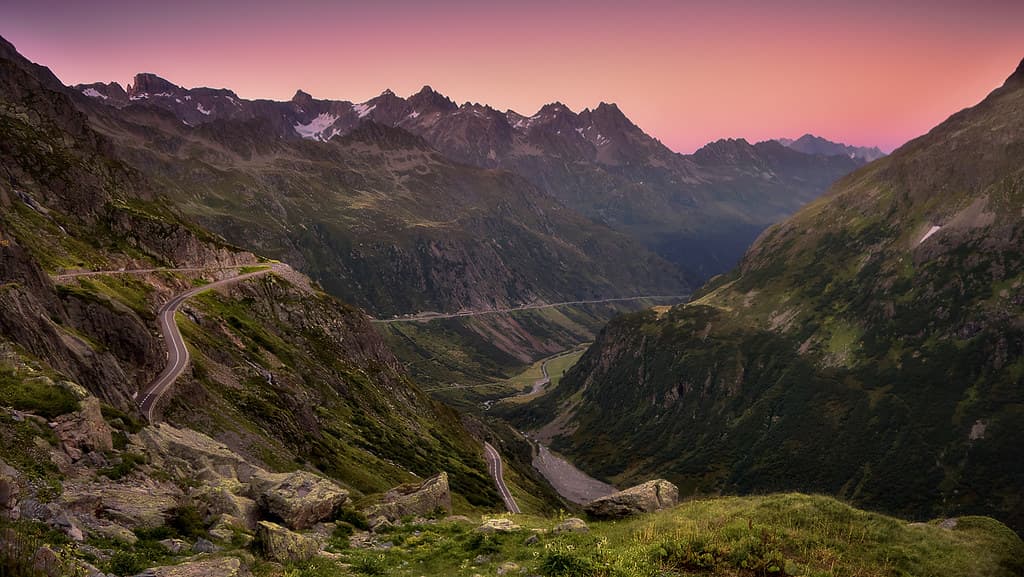
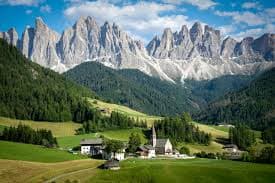
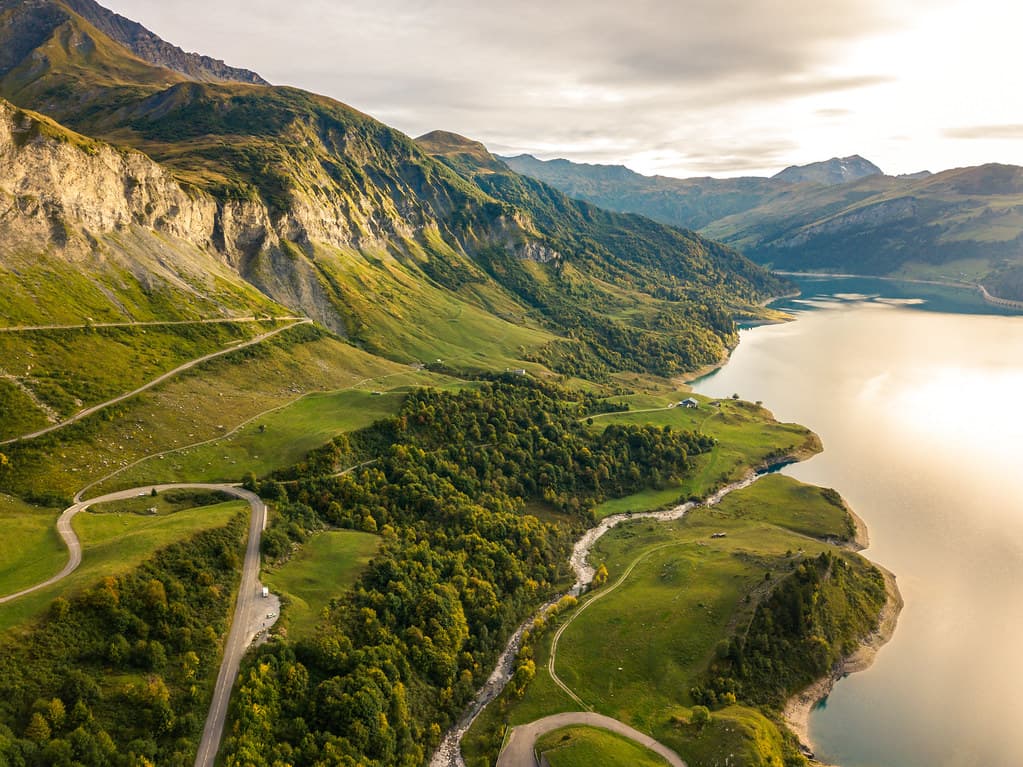
Alpine passes look straightforward on a YouTube onboard: clear road, obvious apex, empty scenery. Reality is denser. You share the road with motorcycles in the wrong place, tour buses that cannot hold a lane on a hairpin, cows that do not read the Highway Code, weather that changes on a thousand-metre climb, and cars with number plates from countries where "stay right" is a suggestion. What follows is the distilled rule set from people who drive these roads for work, not for the gram.
1. Drive early
This is the single largest quality-of-experience variable. Every major alpine pass — Furka, Stelvio, Grossglockner, Pordoi, Galibier — is fundamentally empty before 8am and fundamentally clogged by 10am. The difference is not "a bit more traffic." It is the difference between having 48 Stelvio hairpins to yourself and spending twenty minutes behind a campervan that cannot manage the inside line on a switchback.
The practical version: stay in a town at the base of the pass, set an alarm for 6am, and be at the summit before the first coach starts rolling. Get back to the hotel for breakfast by 9.
2. Use engine braking on the descent
Brakes fade. On a long alpine descent — and many are twenty kilometres of continuous drop — hot brakes can go from "fine" to "not stopping" in a single long corner. The rule is to select a gear one or two below your ascent gear (so if you climbed in third, descend in second) and let the engine hold the car. Touch brakes only for the final tightening of speed into a corner.
This applies to both manual and automatic cars. Most modern automatics have a manual mode precisely because brake fade on alpine descents is a real, annoying, avoidable problem.
3. Know what a hairpin actually is
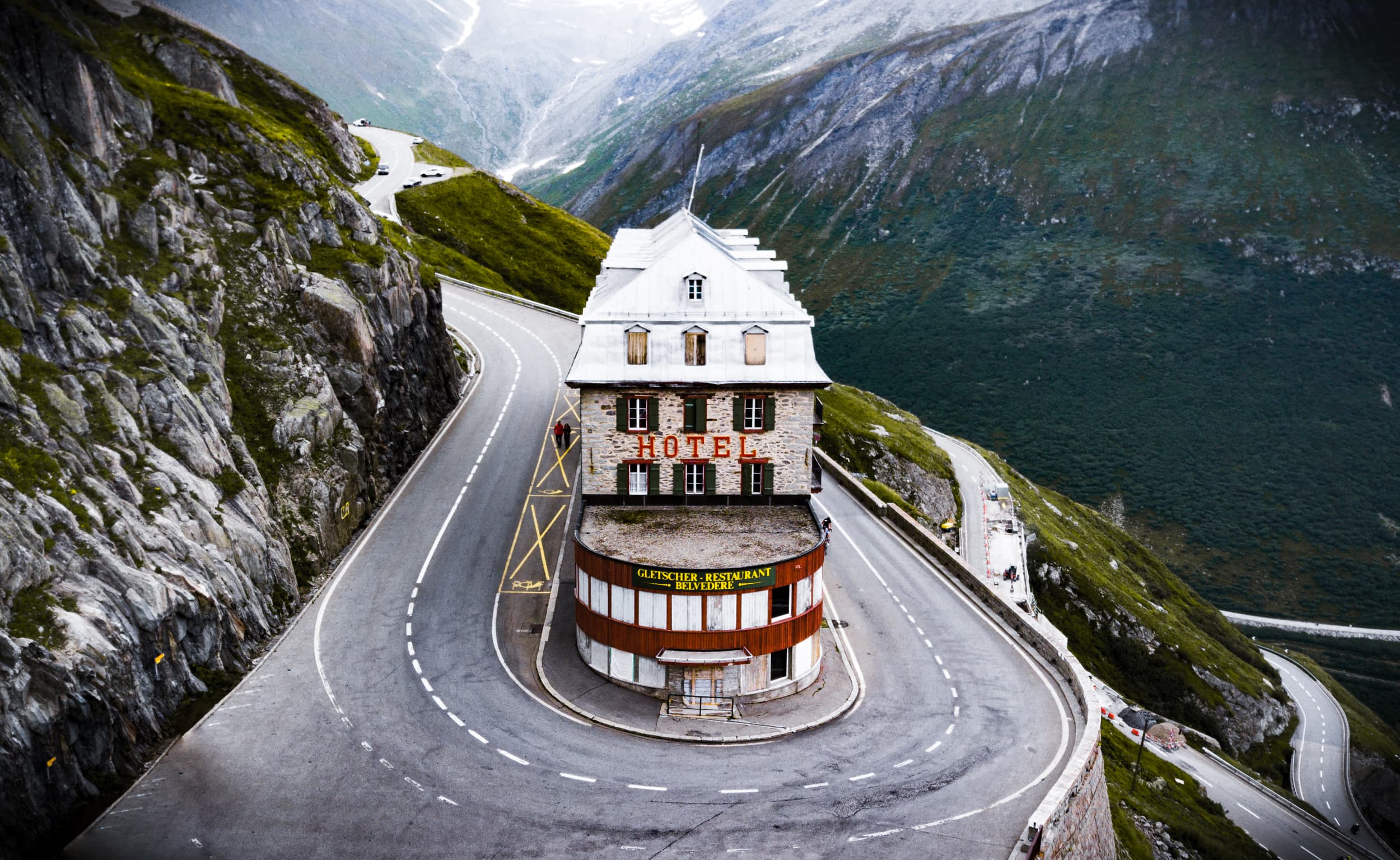
A proper hairpin is not just "tight corner." It is a 180-degree turn, often with a gradient that changes mid-corner, often with a camber that works against you, and often with a wall on the inside and a drop on the outside. The European technique is:
- Approach wide (use the outside of your lane)
- Brake before turning, not during
- Apex late (clip the inside kerb at the halfway point, not the beginning)
- Unwind the steering as you accelerate out
The "late apex" is doing the work for you. A late apex lets you see further through the corner before committing to direction, and it straightens the exit so you can use the throttle earlier.
4. Assume buses cannot hold their lane
They often cannot. Tour buses on alpine passes routinely take up 1.5 lanes in a hairpin — not because the driver is bad, but because the geometry of a 12-metre coach on a 4-metre hairpin physically requires it. If you see a bus coming the other way on a blind inside bend, yield. Stop, pull back against the rock wall, let them swing. Every professional driver does this; tourists don't, and tourists cause the bad accidents.
5. The weather at the top is not the weather at the bottom
A clear valley in the Rhone at 600m can be a whiteout at the Furka summit 2,400m up. Temperature drops 6-7C per 1,000m of elevation. Summer rain in the valley is snow at the summit more often than people expect. Always check the pass summit webcam (every Swiss pass has one at pass-info.ch) before committing to the climb. If the summit is in cloud, the road is usually still fine — it's just that the view you drove up for is not there.
In genuinely bad weather, turn around. Alpine weather can shift in thirty minutes; a delayed start is better than a wrong call.
6. Respect the uphill-has-priority rule
On a one-lane stretch — and there are many — the uphill vehicle has priority. You, descending, stop and back up to the nearest pullout. This is codified law in Switzerland, Italy and Austria; in practice everyone follows it regardless. If you are going downhill and see oncoming traffic on a stretch where only one car fits, you yield. Do not argue. The uphill driver is working harder than you are, and descending with no brakes because you refused to back up thirty metres is not a story you want.
7. Livestock is a real hazard
Cows on the road. Sheep on the road. Goats on the road. Not a rare event — routine in early summer when herds move to high pastures and late summer when they move down. Slow down around meadows, and if you see a herder with a stick, slow down to walking pace. Hitting a cow at 40 km/h damages the car; hitting a cow at 80 km/h damages you and the cow.
Dogs are more subtle — Swiss mountain dogs often work off-leash along the road shoulder. Do not assume they will not step out.
8. Altitude affects more than you think
At 2,500m (Furka, Grimsel, Galibier) you have about 75% of sea-level oxygen. Turbocharged engines are fine; naturally aspirated cars lose 15-20% of peak power. You feel fine if you drove up, but any exertion at the summit will confirm you are short of breath. This matters for photography stops (your pulse jumps climbing out of the car) and for pushing the car (naturally aspirated cars feel slower at altitude, which is expected, not a fault).
The other altitude thing: lanes and roads are narrower at the top, surfaces often rougher. A perfectly good car at 800m can struggle at 2,400m simply because the road is narrower and the hairpins tighter.
9. Carry the basics
Winter tyres or chains if you are driving in shoulder seasons (May, October). Swiss law requires winter equipment from November through April; Italy from November 15 to April 15. Even in summer, a high unexpected snowfall can happen — the Stelvio has been closed by snow in June twice in the last five years.
A spare tyre or a tyre repair kit. Alpine garages exist but they are spaced out, and a flat on the Stelvio without the means to get moving is expensive.
Water. An hour of hairpins in 28-degree valley heat is tiring even if the summit is cool.
10. If it stops being fun, stop
The stupidest single thing enthusiasts do on alpine passes is push through fatigue. You have been driving five hours, the brakes are hot, you are thirsty, the bus in front is at 25 km/h and you are thinking about overtaking on the next straight. Do not.
Every pass has summit pullouts and rifugi. Stop for ten minutes, drink water, breathe, let the car cool. The best driving photos are taken by people who were still having fun when they took them.
What separates a good alpine drive from a great one
In order: a 6am start, engine-braking discipline, respect for the uphill rule, and knowing when you have had enough. Everything else is technique layered on top. The people who drive these roads best are the ones who drive them regularly — the guides, the delivery drivers, the emergency services — and the common trait is not speed. It is judgement.