The Deutsche Alpenstrasse is the German equivalent of the Route des Grandes Alpes, not as high, not as dramatic, but significantly more accessible and easier to drive at pace. 450 signed kilometres from Lindau on Lake Constance to Berchtesgaden in the far east of Bavaria, traversing the northern edge of the Alps without ever climbing above 1,700m. Surfaces are German-good throughout, traffic is manageable outside of school holidays, and the route weaves between genuine alpine terrain, meadow-and-lake country, and small towns that look like they were built for postcards.
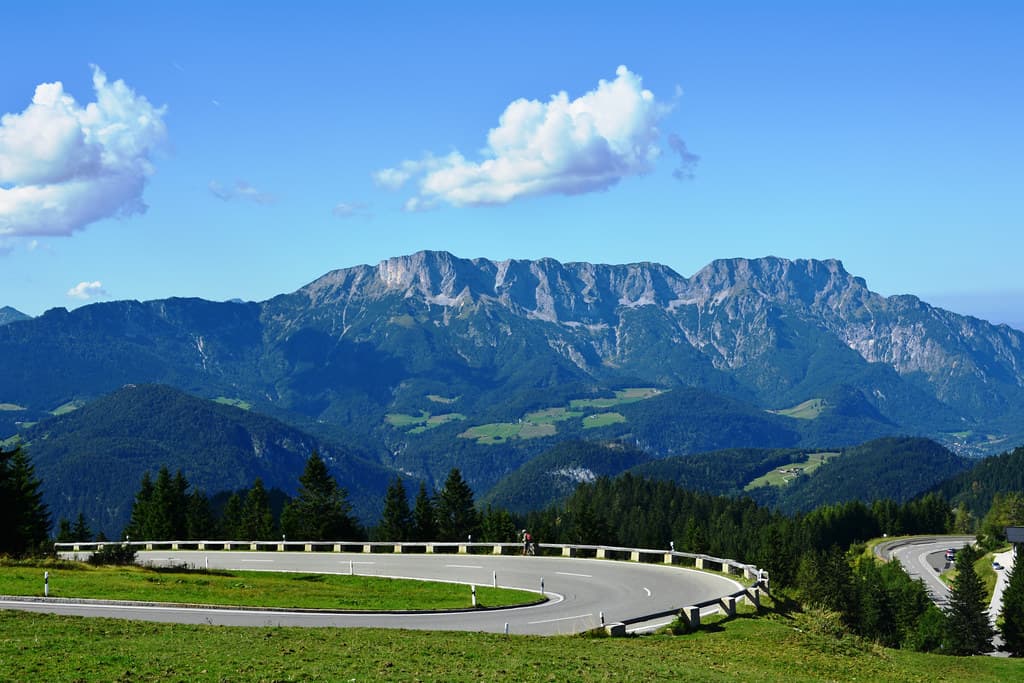
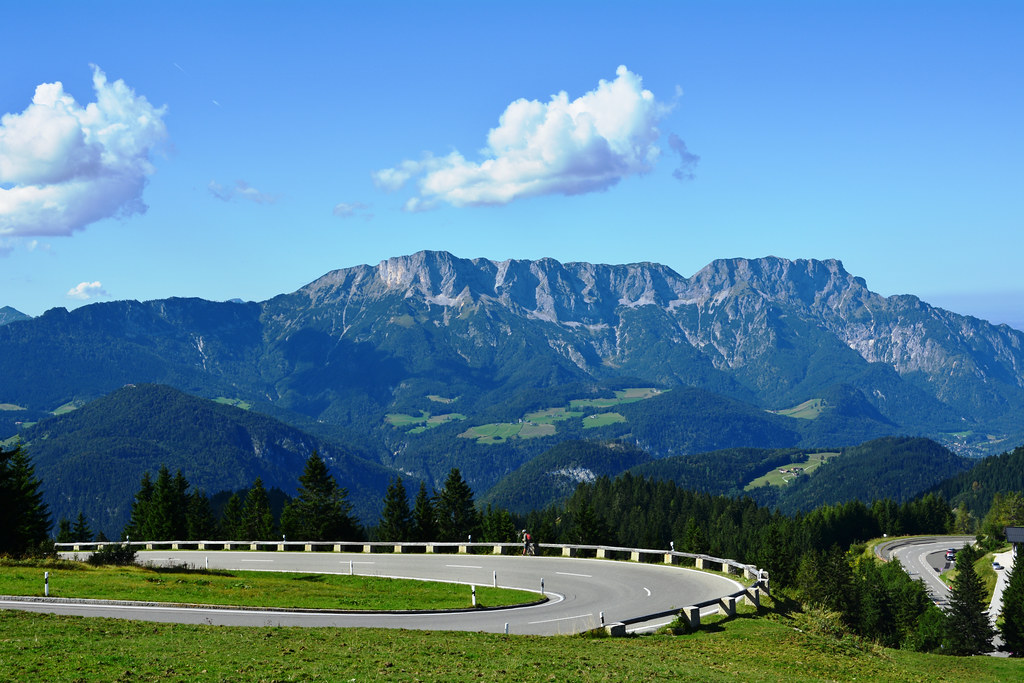
Three days is the right pace. The western section (Lindau to Füssen) is the gentlest, lake views, Allgäu meadows, Neuschwanstein on the horizon. The middle section (Füssen to Mittenwald via Garmisch-Partenkirchen) is the most alpine, passing under the Zugspitze and over the Karwendel approaches. The eastern section (Mittenwald to Berchtesgaden) is the most varied: the Tegernsee, the Chiemgau, and a final climb over the Rossfeld Panoramastrasse (the highest public road in Germany) before the descent into Berchtesgaden.
Base 1: Hotel Sonne Lindau or the Bayerischer Hof in Lindau on the lake for the arrival night, both with covered parking. Base 2: Hotel Hirsch in Füssen, or for a more premium option the Schloss Hotel Lisl just outside town. Base 3: the Hotel Edelweiss in Berchtesgaden, or for a serious treat the Kempinski Hotel Berchtesgaden above the town. All three towns have proper driver infrastructure, covered garage, fuel nearby, morning espresso in walking distance.
The Alpenstrasse itself is free (no toll), but the Rossfeld Panoramastrasse near Berchtesgaden has a small toll (around €8). The autobahn connections around Munich are all derestricted in long sections, which makes a same-day Munich airport return feasible from Berchtesgaden (about 2 hours on the A8). Surface quality is excellent throughout. The road is signed with brown "Deutsche Alpenstrasse" markers; following them is trivial, though a GPS or paper map helps with optional side trips (Oberammergau, Garmisch itself, the Eibsee).
Season is longer than the high-alpine routes: late April through October, with the central and eastern sections passable year-round in most winters (chain carry required December–March). Late September and early October are the strongest weeks, autumn colour in the forests, thin traffic, cool mornings.